
About Us
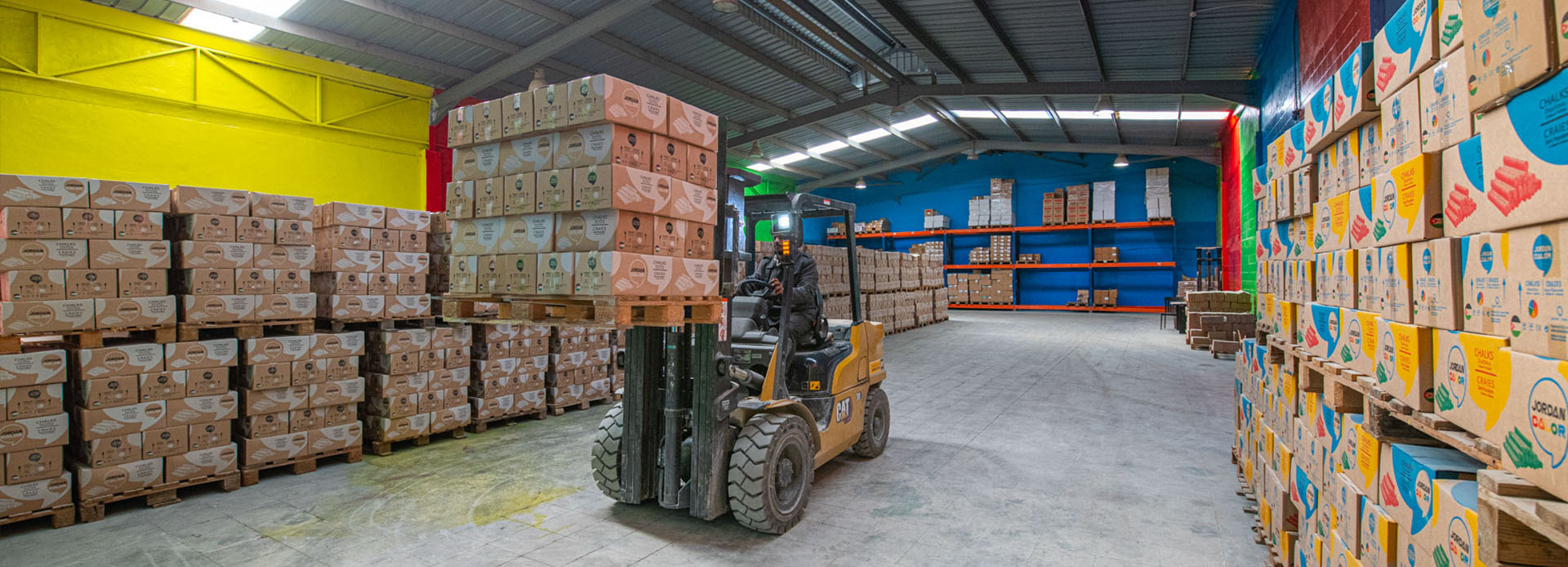
JordanChalk is a company established in 2002, today recognized as one of the biggest manufacturers in the world. With decades of experience, advanced facilities, and a strong commitment to quality, we provide chalk, crayons, modeling clay, dough, and accessories to 100+ countries across the world.
With our modern factory which covers 7,500 sqm in the Karak industrial zone, equipped with advanced extrusion and molding lines, we combine quality with innovation to serve the global education and creative industries. Our reputation is built on delivering:
- Private Label Services: Flexible solutions to create customized, branded products for international markets.
- Product Variety: A complete portfolio covering school chalk, jumbo chalk, crayons, modeling clay, dough, and accessories.
- Certified Quality: EN71-tested, non-toxic, and dust-reduced products that meet global safety and performance standards.
- Competitive Price: Cost-effective manufacturing that delivers value while maintaining high quality.
- Reliable Delivery: A global distribution network ensuring partners receive their orders on time
1995 – 2002
2003 – 2007
2008 – 2009
2010 – 2011
2011 – 2012
2013 – 2014
2015 – 2017
2018 – 2021
2023 – 2024
2025-2026

Moulded Process
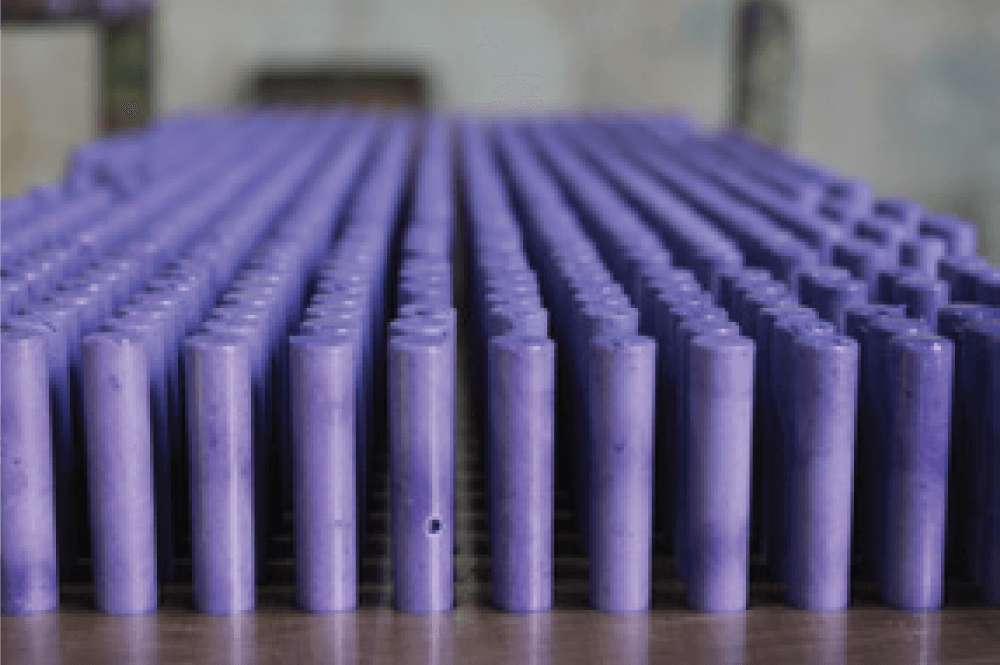
The moulded method , produces chalk which is softer than the extruded chalk, and is NOT dustless. Dry pigment and water are first mixed in preparation for the addition of plaster of Paris. Because plaster begins to set quickly, this process must be carefully timed and supervised.
Before the mixture gets too thick, it is poured into a molding machine with many holes that are the exact size and shape of the finished pieces of chalk.
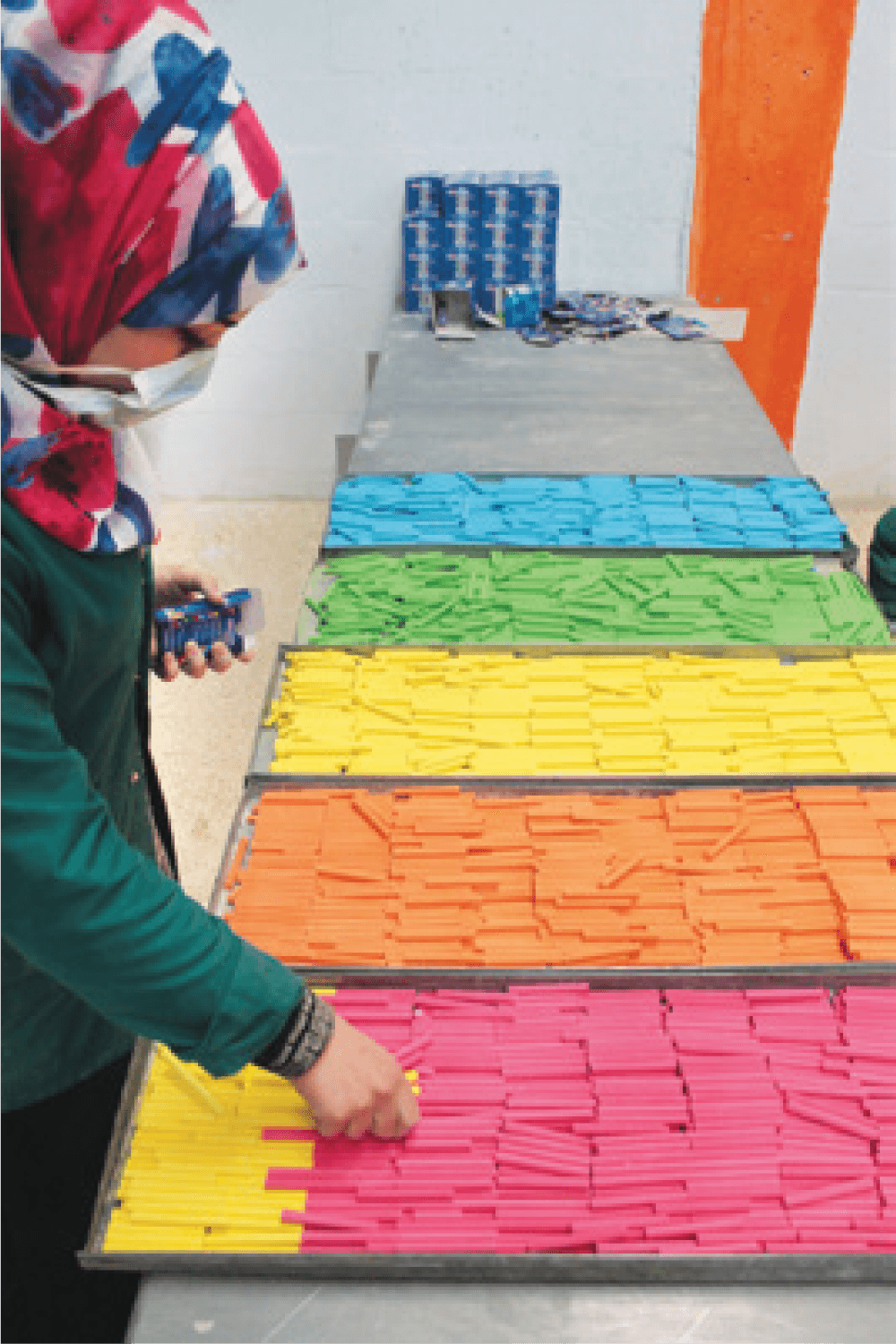
Excess chalk “batter” is scraped off the tops of the moulds, and after a setting of five to eight minutes, depending upon the particular color being manufactured, the sticks of chalk are popped out onto a tray which is then stacked in a large drying rack.
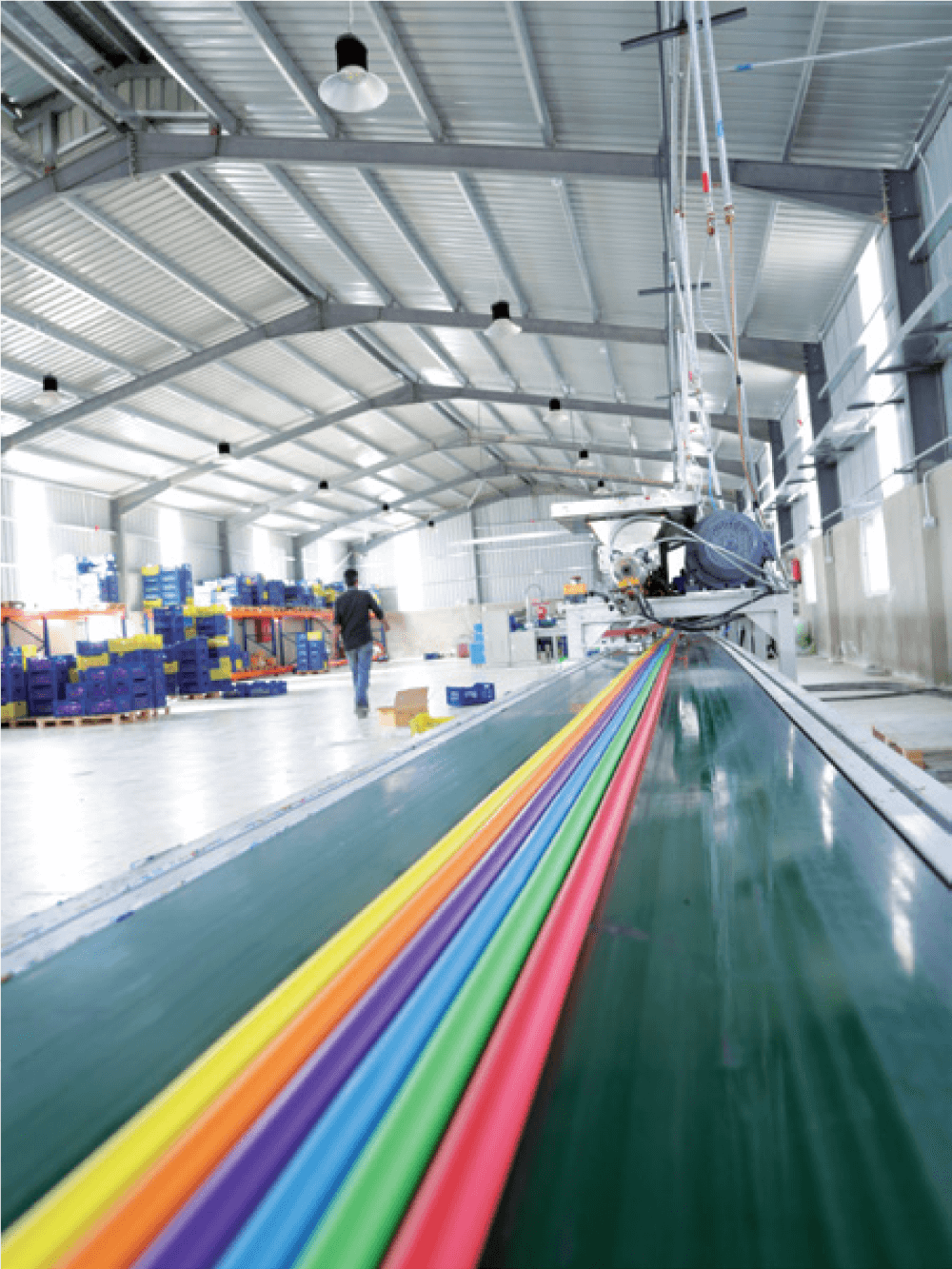
Extrusion Process
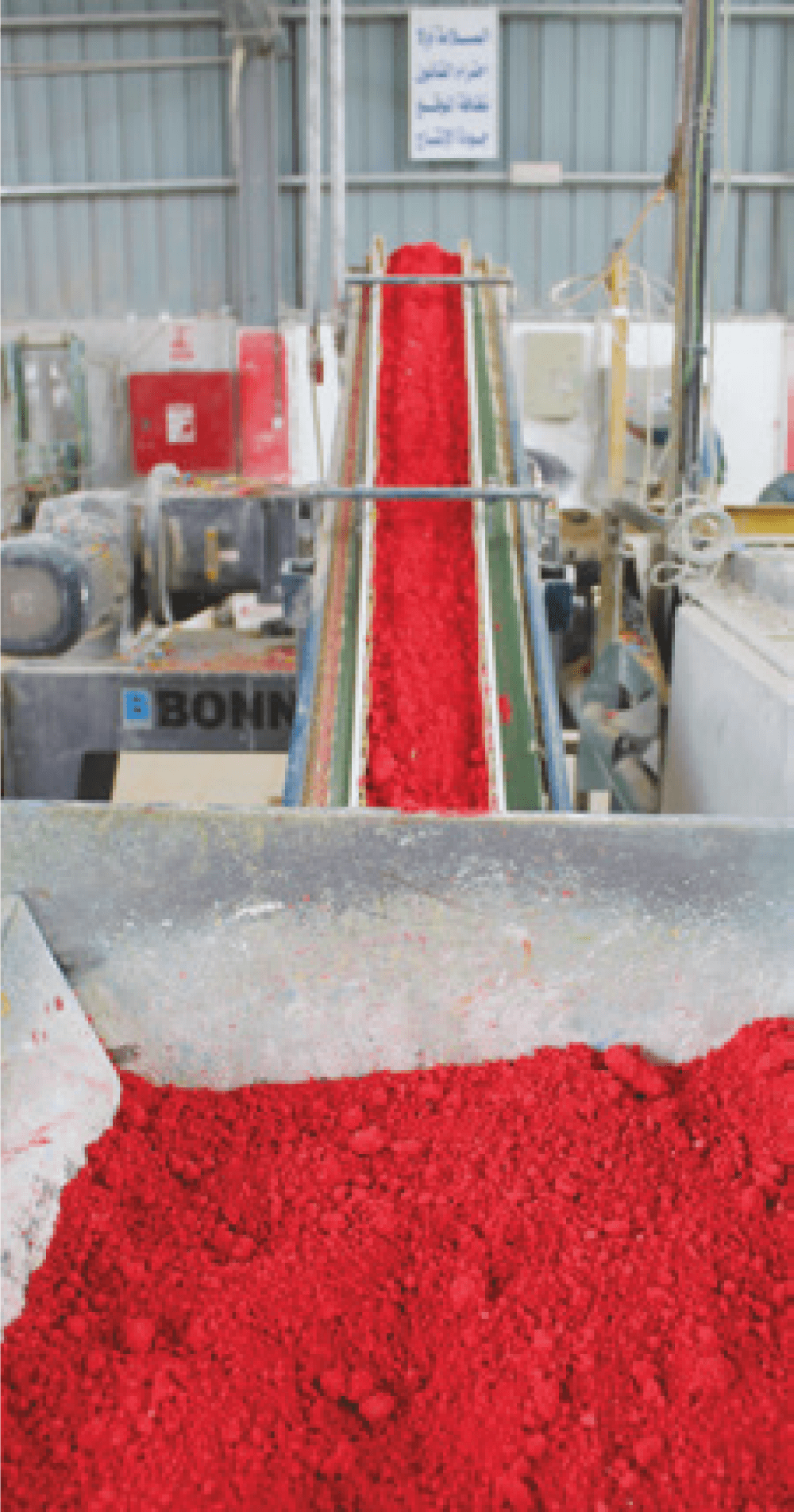
To produce extruded chalk, the makers first stir together, by machine, several white powders. The most important of these is calcium carbonate and water-washed clay. If the chalk is to be colored, the particular color is likewise added in the form of dry, finely ground pigments.
After all of the powders are well mixed, they are transferredto another large machine where a liquid “binder” is poured in to hold the dry particles together. After the powders and their binder have swished around for a certain length of time, the chalk forms a kind of dough which looks like many small balls about the size of marbles. These little dough balls are then machine-pressed into a large, long shape, just like a solid cylinder.
This shape is called a cartridge. As a result of this pressing, air is forced out of the dough, and the moist particles in the dough are very closely bound to one another causing the chalk to be heavy and smooth textured. The cartridge, which is still damp and pliable, is then inserted into another machine called an extrusion press, where it is forced through a small tube. As the long rope of wet chalk comes out, an automatic slicer cuts it into many pieces. These pieces roll down to a tray, and are ready to be cut again into regular size sticks of chalk 80 mm. Since the pieces are still quite moist, they must be dried in large ovens, called kilns, before they become hard enough to be packed. Extruded chalk was described as “dustless”.
In the case of extruded chalk, however, the dust particles are weighted to fall straight down instead of flying through the air to make dust. In other words, the dust in “dustless” chalk is chemically controlled. Both molded and extruded chalks are manufactured in a variety of colors and shapes. There are round sticks, long square ones, Triangle, and their uses are varied. Chalks made for school and home are different from those needed in an art studio or factory; and just as in a family, no two members are alike even though they may resemble one another.